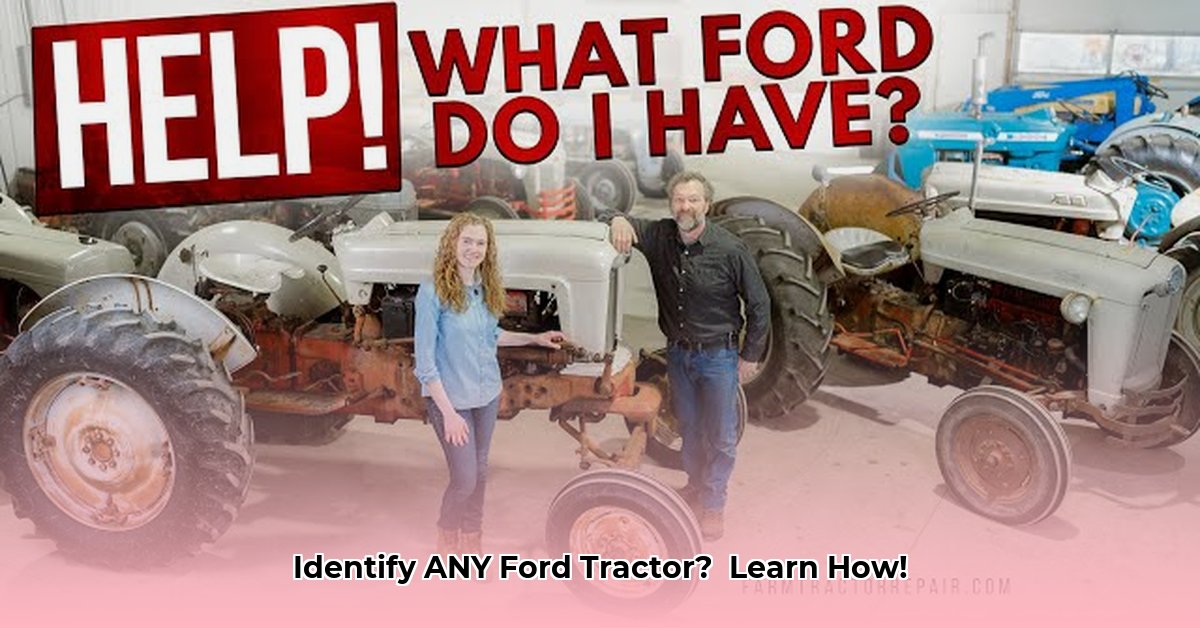
Identifying a vintage Ford tractor can be a rewarding challenge, crucial for restoration, valuation, and parts sourcing. This guide provides a step-by-step approach for both novice and experienced enthusiasts, combining visual inspection with serial number decoding and online resources. For more specific information on the Ford 8N, check out this helpful resource: Ford 8N information.
Visual Identification: The First Clues
Before diving into numbers, a visual inspection can reveal significant clues. Think of it like comparing photos – subtle differences can be telling. Examine these key features:
Grill Design: The shape and style of the grill (the front-facing metalwork) varies considerably between Ford tractor models. Is it simple, flat, or more ornate and curved? A simple design might indicate an older model, while more complex styles often suggest later models.
Wheelbase: The distance between the front and rear axles (the wheelbase) is a strong indicator of size and, often, age. Generally, larger, heavier tractors have longer wheelbases.
Engine Type: Note whether the engine is gasoline or diesel. Engine size and type (including the presence of specific features like a turbocharger) can substantially narrow down the model possibilities. Older models frequently utilized gasoline engines, while later models transitioned to more efficient diesel power.
Serial Number Decoding: The Key to Identification
The serial number is the most reliable method of definitive identification. It acts like a unique fingerprint for your tractor.
Locating the Serial Number: The number's location varies widely depending on the model and year. Common locations include: the engine block (often on a small plate), the transmission housing, the axle, or even on the tractor's frame. Online resources dedicated to Ford tractors provide model-specific guidance.
Deciphering the Code: Ford employed different serial number systems across its production history. Older tractors often had simpler codes, while newer models used more complex alphanumeric sequences. Each character often contains information vital to model identification, but the meaning will vary over time.
Leveraging Online Resources: Dedicated Ford tractor websites and forums are invaluable for interpreting serial numbers. These communities of enthusiasts often have extensive knowledge of various coding systems and are willing to assist in decoding.
Data Plates and Markings: Additional Information
Beyond the serial number, look for data plates—metal plates riveted to the frame—often containing the model number, engine specifications, and sometimes even the production date. Pay close attention to any other markings, as these can provide supporting evidence or reveal modifications. Even partially legible information can be useful.
Online Resources: Your Research Allies
Several online platforms can significantly aid identification:
| Resource Type | Example | Benefits |
|---|---|---|
| Online Forums | MyFordTractors, and other enthusiast sites | Access to experienced owners and detailed model information. |
| Tractor Identification Websites | TractorData and similar resources | Databases with detailed specifications for various Ford tractor models. |
| Parts Catalogs | Online parts suppliers | Compare part numbers found on your tractor to model numbers in catalogs. |
Troubleshooting Common Challenges
Identifying a Ford tractor isn't always straightforward. Missing or damaged data plates are common issues, especially with older tractors. In such cases, the visual clues and serial number analysis become even more critical. Persistence and a multi-faceted approach are key to success.
Conclusion: Assembling the Information
Identifying your Ford tractor involves combining several pieces of information. Begin with visual inspection, moving onto serial number decoding, then checking for data plates and any other markings. Use online resources as needed – combining these methods should yield the most accurate results. Remember that even experts may disagree on occasion, but with thorough investigation, you'll likely be able to accurately identify your vintage Ford tractor.